
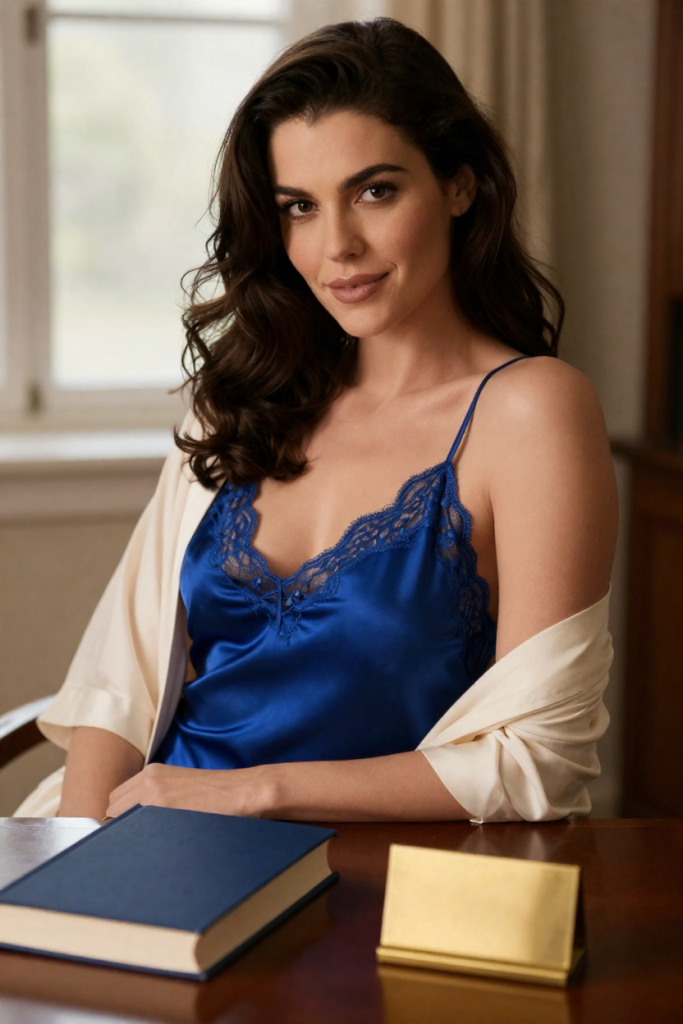
The deep-blue volume on the nameplate desk is never opened on camera — and that restraint is the whole composition.
A closed cover is a promise, not a gap. An open book in a portrait pulls the eye toward the page and away from the sitter; worse, it invites invented print. Our sittings keep the biography closed, its gilt ribbon resting over a plain deep-blue cover, so the image is about the woman and the mood of a life about to be told — never about text that was never real.
The nameplate beside the book works the same way. It is polished brass, smooth and deliberately unengraved. In a real studio it would carry a name; in ours it stays blank, because every sitter here is fictional and no real person’s name belongs on the plate.
How to brief a closed-book portrait. Describe the sitter first — age, hair, expression — then the wardrobe, then the desk: book colour, ribbon, and one object. Keep the object count at one. A crowded desk reads as clutter at thumbnail size, while a single plate or ribbon survives the crop and gives the portrait its signature.
If a generation opens the book or etches letters into the plate, we discard it and generate again inside the same sitting rules. The desk never changes; the women do — that contrast is what makes a gallery feel like one book with many frontispieces.